

If you’ve spent any time navigating the UK special educational needs and disabilities (SEND) landscape lately, you know firsthand that there have been a LOT of proposed changes to policy and framework published recently. The proposed reforms, consultations, ambiguous government messages and delays in accessing support can make figuring out the next step feel completely overwhelming.
Last week I stepped out of my daily life and spent an incredibly insightful day at the nasen LIVE 2026 conference. As one of the UK’s leading SEND conferences, this year’s event was built around a vital and timely theme: “Inspiring SEND Innovation Through Times of Change.” The day brought together hundreds of passionate education professionals, school leaders, and specialists all looking for practical pathways forward following the government’s latest SEND reform proposals. I spent the day following the sessions in the Main Room, listening closely to the national conversations shaping the future of education and inclusion in the UK
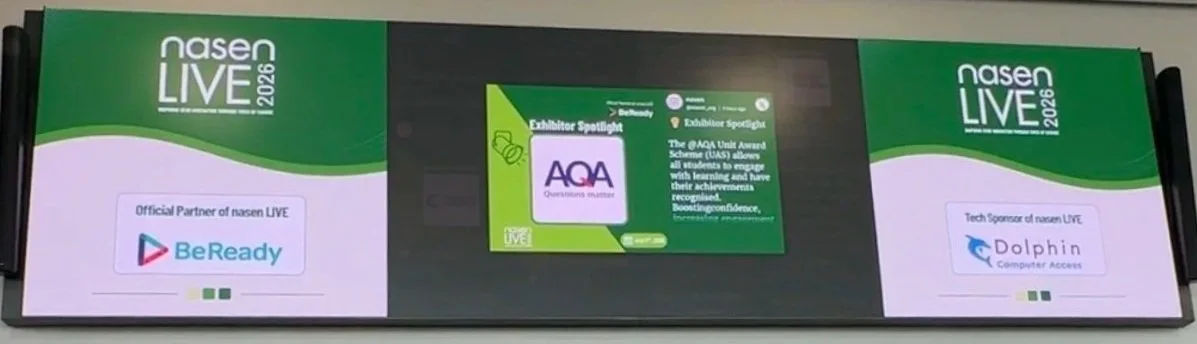
While it was heartening to see and meet so many people dedicated to positive change, the sessions I attended highlighted some massive, realistic challenges that we face on the ground. Here are my 3 key takeaways from the main stage.
The SEND Reforms: Aspirational Goals vs. Frontline Realities
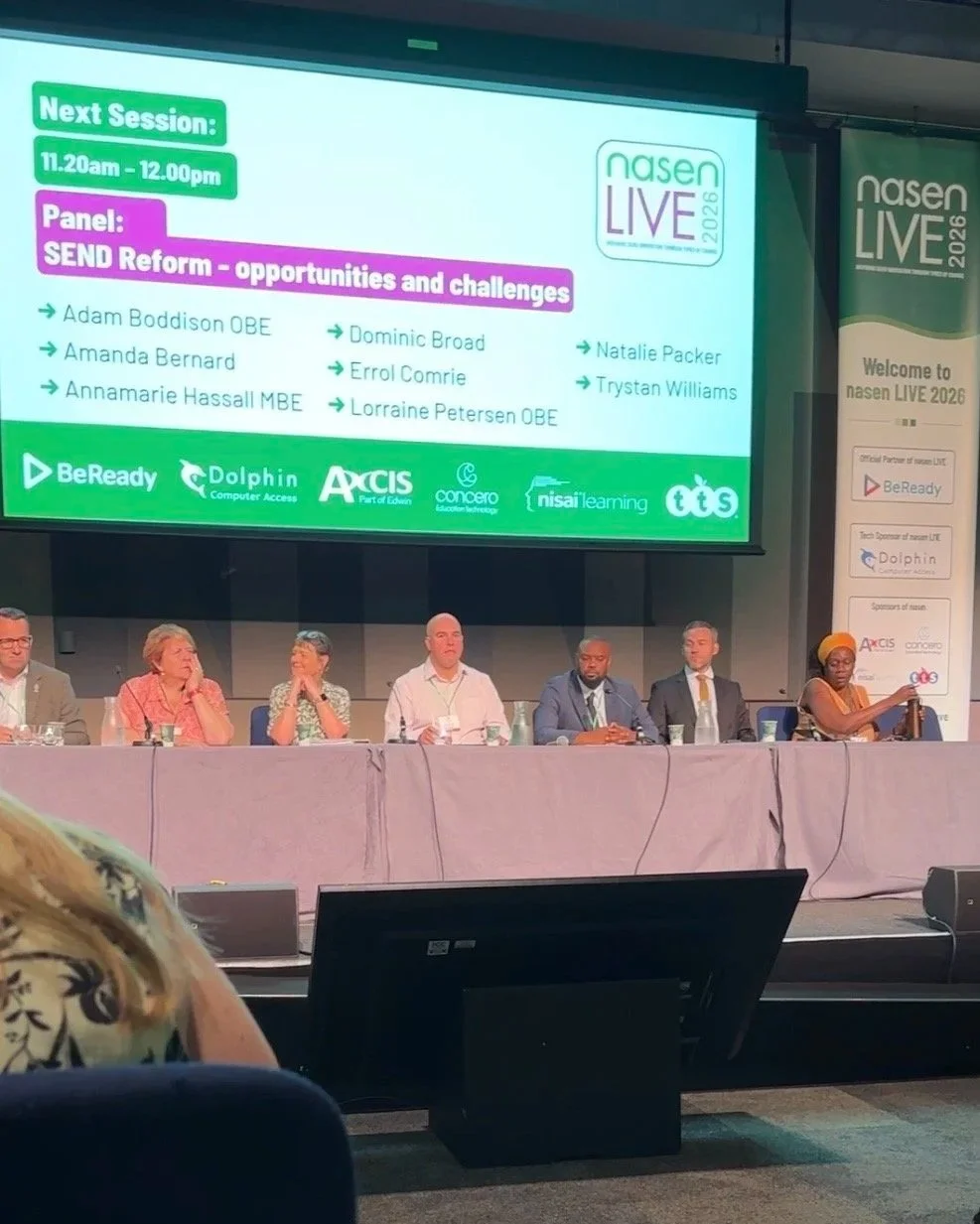
This takeaway was sparked by two vital morning sessions: Erica Wolstenholme’s seminar, Navigating the SEND Landscape, and the subsequent Panel: SEND Reform opportunities and challenges, which featured insights from Adam Boddison OBE, Amanda Bernard, Annamarie Hassall MBE, Dominic Broad, Errol Comrie, Lorraine Petersen OBE, and Trystan Williams.
During these discussions, there was a very clear, shared sentiment among the educational practitioners in attendance. While the inclusion goals outlined in the white paper SEND reforms are widely seen as positive and aspirational, there is a deep, underlying concern about how realistic they actually are. Practitioners are worried about the immense additional pressure being placed on already stretched school staff; the panel acknowledged that passion and good intentions would not be enough to achieve the inclusion goals outlined in the SEND reforms.
Many panellists touched on the difficulty with a distinct lack of clarity on how schools are supposed to meet these new expectations alongside the reality of existing underfunding, and the gap between policy and practice feels wider than ever. Aspirational words are a start, but without clear roadmaps and proper funding, they continue to risk placing an unsustainable burden on the staff and families on the ground.
True Partnerships: Families as the 24/7 "Experts at Hand"
From my perspective, the heart of the day centered on what it truly means to "work in partnership". The tone was set beautifully during the morning panel discussion by Amanda Bernard, who shared an undeniable truth that resonated deeply with me… for true inclusion to happen, parents and families must be an active, central part of these conversations. She reminded the room that for SEND parents, inclusion and advocacy isn't a job or a role we get to switch off at the end of a standard workday. It is a 24-hour-a-day reality for us.
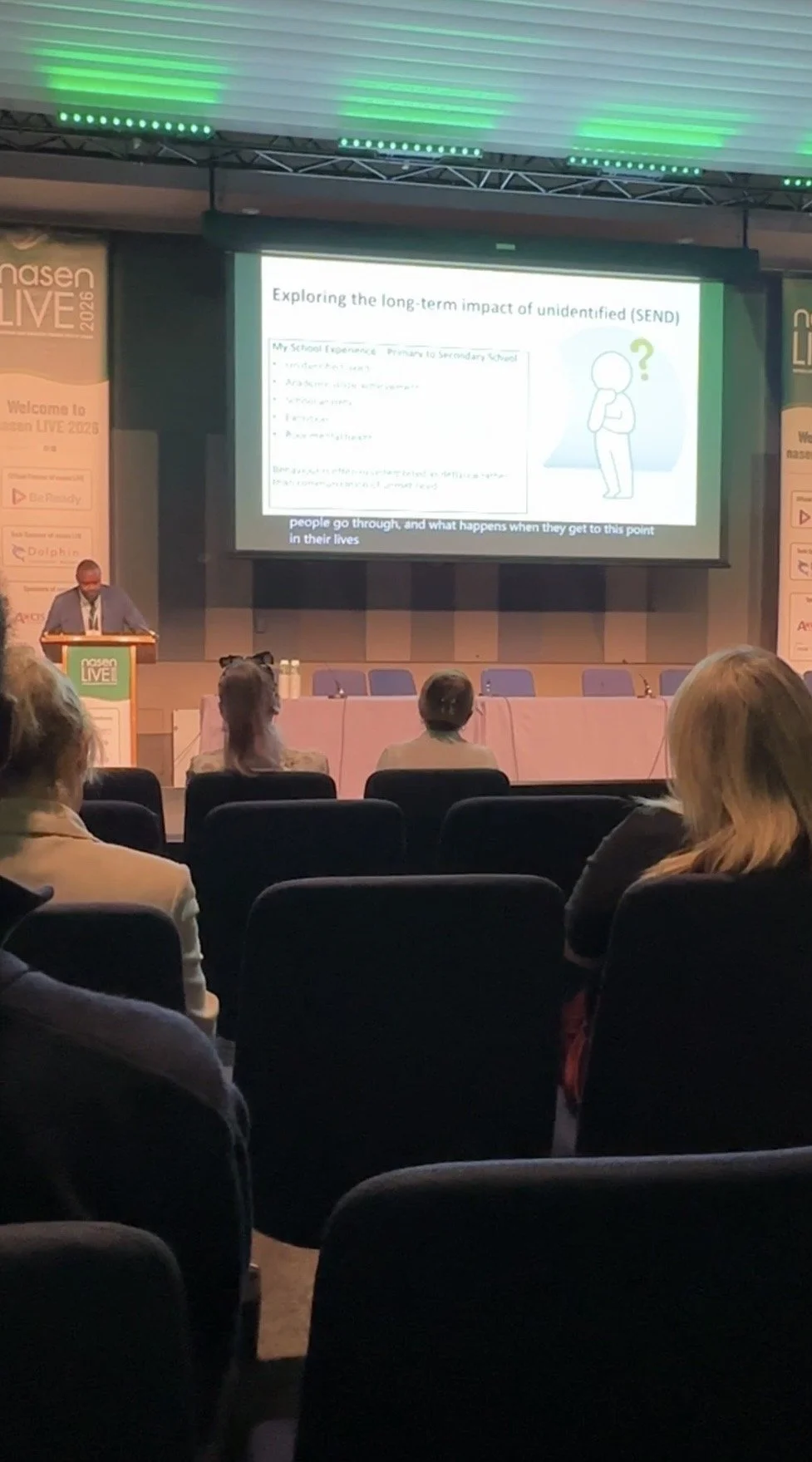
This reality was underscored powerfully by Errol Comrie during his seminar, From Missed Needs to Meaningful Support: Strengthening SEND Provision Through Early Intervention and Inclusive Practice. Errol spoke with vulnerability about the profound impact of his own late diagnosis and the severe systemic risks that occur when a child's needs are missed during their school years. When a child’s specific profile is misunderstood or ignored, they may completely disengage with the education system because they believe it just isn’t suited to them or they rely on exhausting coping mechanisms and masking just to survive the school day which inevitably leads to intense anxiety, low self-esteem, and emotional burnout later in life.
Emma Shackleton’s seminar, From Barriers to Breakthroughs: Turning Tricky Parent Meetings into Powerful Partnerships, reinforced this by showing how school conversations can be transformed when professionals actively value this 24/7 family expertise rather than treating it as an obstacle. For professionals to be able to work in effective partnership with parents, they need to acknowledge that many SEND parents are coming into conversations with schools already exhausted and emotionally drained from fighting for support.
It was reassuring to hear others reflect that it is key that parents are not only involved in conversations and planning but that their life experience as SEND parents should be valued as ‘expert’. The stakes feel high for our children's long-term mental health, we need the education system to move away from treating professional opinions as the sole authority and instead recognise parents as the true "experts at hand."
One of the core beliefs behind Kind of Extraordinary is that you are already the expert in your child. Your insights, daily observations, and deep understanding of your child make you an asset to any support team, and parent expertise is a necessity not an optional extra or box to tick to ensure practitioners are legally compliant.
The Inclusion Illusion: Masking, Support Barriers, and the Parent-Professional Struggle
This final takeaway was driven by Clive Lawrence OBE’s incredibly powerful session, The Inclusion Illusion: Why presence alone is not inclusion. Clive cut straight through surface-level definitions of inclusion and addressed a reality that so many families live every single day, the immense difficulty of parenting a high-masking child.
When a child presents entirely differently at home compared to how they appear at school, it creates an invisible barrier to support. Schools look at a child who seems compliant, quiet, and "fine" in class, completely unaware of the sheer exhaustion, anxiety, and eventual dysregulation that spills over the second they cross the threshold into the safety of their own home, or as soon as you pick them up. With this disconnect in presentation, families can face an uphill battle just to get schools to acknowledge that their child has underlying needs, let alone secure the essential support and adjustments they require.
Clive also shared a deeply personal layer to this systemic disconnect by opening up about his experience as a kinship parent. Because of his daughter’s care status, he found that professionals consistently tried to view his child's needs entirely through a trauma lens rather than a SEND lens. Even though he had been her parent since birth, the system default was to pathologise her background rather than identify and support her actual neurodivergent profile. It's a textbook example of how institutional assumptions can completely blindside proper support pathways.
This beautifully complex irony struck an incredibly personal chord with my own journey as a specialist and advocate. Clive highlighted the profound personal struggle of trying to be heard as a parent when your everyday professional role is explicitly centred on education and advocacy. Sometimes you enter meetings and it’s assumed that because of your professional work, you have the necessary skills and knowledge required to support your individual child’s needs without the need for external or additional support. In other instances, your professional experience is dismissed; you can possess all the frameworks, the technical vocabulary, and the system training in the world for your job, but the moment you step into a meeting room to advocate for your own neurodivergent child, that professional weight is stripped away. Suddenly, you are met with the same systemic gatekeeping, dismissal, and barriers as everyone else, leaving you stuck in an exhausting loop of trying to prove your child's reality to a system that refuses to listen.
As the day closed with final remarks from nasen Chief Executive Annamarie Hassall MBE, it became clear that the people sitting in that room were "the converted." Most people in the room had chosen to attend, to some level they understood the nuances of masking, the flaws of the system, and the heavy burden families carry. But true inclusion cannot live inside a conference hall. For our children to be genuinely accepted and supported, we have to move past superficial presence and collectively advocate for structural and systemic changes that respect the full, authentic reality of neurodivergent children and the families raising them.
Attending nasen LIVE 2026 reinforced exactly why I do this work. SEND parenting is advocacy, and navigating these systems is an exhausting journey. Knowing that these vital conversations led by lived experience are happening on a larger scale gives me hope. Let’s keep moving forward, celebrating our children's strengths, and pushing for a world where they don't have to change themselves to be valued.